So far, it has been unclear how the neuronal network for this cognitive ability is constructed. Earlier theoretical models had assumed a firmly implemented circular circuit with four involved neurons for the four arithmetical operations ‘equal to’, ‘zero’, ‘more than’ and ‘less than’, explained Professor Nawrot. ‘However, our computer model showed that not four, but only one neuron is sufficient. The action potential of a single neuron varies depending on the math problem — and this can be trained on the neuron. As a result, the researchers identified a comparatively simple model with which a neural network can learn to solve numerical cognition tasks.
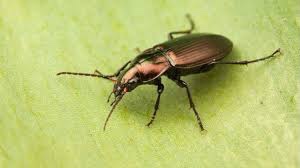
‘Experiments showed that insects such as honeybees can actually “count” up to a certain number of objects. For example, bees were able to compare sets of objects and evaluate whether they were the same size or whether one set was larger than the other’, said Hannes Rapp, explaining the underlying question of what is known as numerical cognition. For example, the bee recognized that six diamonds are more than four circles.

 cute animals and pets